You place your phone on the wireless charger like you do every night. Nothing happens. You adjust the position. Still nothing. That tiny crack on your phone’s back glass? It’s not just cosmetic damage anymore.
Here’s what most Houston phone users don’t realize: that “minor” back glass crack is silently draining your wallet, compromising your phone’s protection, and killing features you paid premium prices to enjoy.
Before you slap a case over it and call it a day, you need to understand exactly what’s happening beneath that shattered surface.
The Structural Integrity Risks of a Shattered Back
Modern smartphones aren’t built like the plastic phones of the 2000s. That sleek glass back panel serves multiple critical functions beyond looking good.
It’s Part of Your Phone’s Skeleton
Your phone’s back glass works with the metal frame to create a rigid structure. When that glass shatters, even partially, you lose significant structural support. The result? Your phone becomes more vulnerable to bending, flexing, and further damage from everyday use.
Think about it. Every time you sit down with your phone in your back pocket, slip it into a tight bag, or accidentally press against it, that compromised structure takes hits it can’t properly absorb anymore.
Thermal Management Gets Disrupted
The glass back helps dissipate heat from your processor during intensive tasks. Cracks interrupt this thermal distribution, causing your phone to run hotter. In Houston’s brutal summer heat, this becomes a serious problem. Overheating leads to battery degradation, performance throttling, and in extreme cases, permanent component damage.
The Domino Effect
One crack rarely stays one crack. Pressure points shift. Vibrations travel differently through compromised glass. What started as a single spider web pattern can expand across the entire panel within weeks, sometimes overnight after temperature fluctuations common during Houston’s unpredictable weather swings.
How Cracks Let Sweat and Rain Kill Your Motherboard
That glass back isn’t just structural. It’s your phone’s primary defense against Houston’s humid environment.
Moisture Finds Every Opening
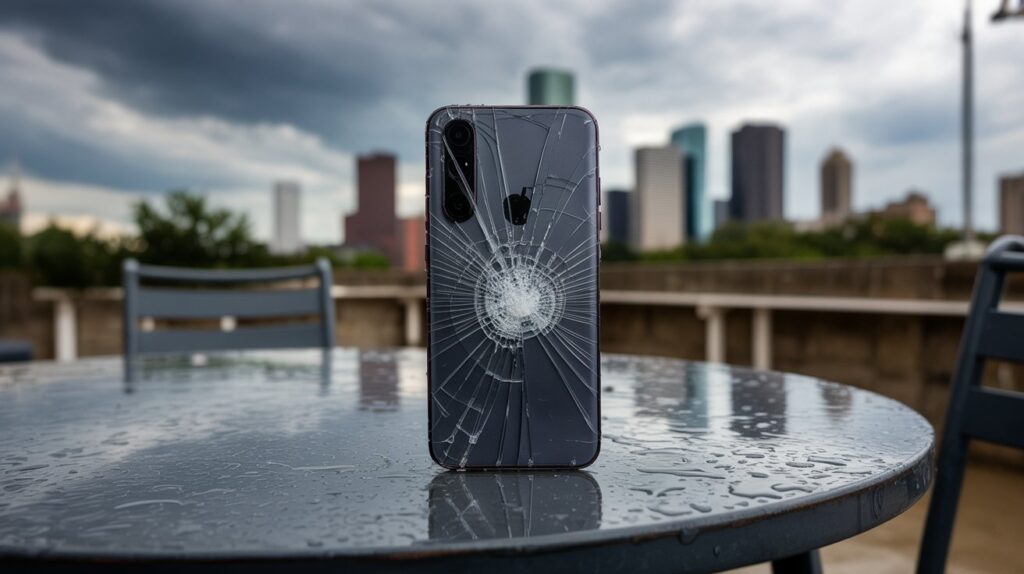
Glass cracks create microscopic pathways directly into your phone’s internals. Houston’s average humidity hovers around 75%. Every time you step outside, your cracked phone absorbs atmospheric moisture like a sponge.
The damage happens gradually. Moisture reaches copper traces on circuit boards. Corrosion begins. Connection points deteriorate. One day your camera stops working. Then your speaker crackles. Eventually, your motherboard gives out entirely.
Sweat Is Worse Than Rain
Rain is water. Sweat is a corrosive cocktail of salts and minerals. Houston runners, outdoor workers, and anyone who exercises with their phone nearby should be especially concerned.
Sweat seeping through back glass cracks accelerates corrosion dramatically. We’ve seen phones come into our Houston repair shop with completely green motherboards. The owners had no idea the damage was happening because their screens still worked fine until they didn’t.
Water Resistance Rating? Gone.
That IP68 rating you paid extra for? It assumed your phone was intact. A cracked back glass immediately voids your water resistance protection. One unexpected rainstorm, one dropped phone near the pool, one spilled drink and your phone becomes an expensive paperweight.
Why Your MagSafe Might Stop Working
For iPhone users, back glass damage creates an additional problem most people never anticipate: MagSafe failure.
Understanding the Magnet Array
MagSafe isn’t just clever marketing. It’s a precise ring of magnets embedded beneath your back glass, aligned perfectly to connect with chargers and accessories. When back glass shatters, several things can go wrong.
Glass fragments can shift and interfere with magnetic alignment. The magnets themselves can become displaced or damaged. Even tiny movements in the internal positioning can break the connection your MagSafe charger needs.
The Charging Coil Problem
Directly beneath that glass sits your wireless charging coil. It’s a delicate copper component that relies on precise positioning to work efficiently. Cracked glass often means compromised charging coil protection.
We regularly see phones where wireless charging works intermittently after back glass damage. Sometimes it charges. Sometimes it doesn’t. Sometimes it heats up dangerously because the coil isn’t aligned properly with the charger.
Accessories Stop Connecting
MagSafe wallets that fall off constantly. Car mounts that won’t hold your phone securely. Battery packs that disconnect during use. These frustrations all trace back to that cracked back glass disrupting the magnetic connection points.
How We Use Precision Lasers to Remove Glass Without Prying
Traditional back glass repair is brutal. Technicians heat the phone excessively, then pry at the glass with tools that can easily slip and damage internal components. It’s risky, time-consuming, and often leaves phones worse than before.
Laser Technology Changes Everything
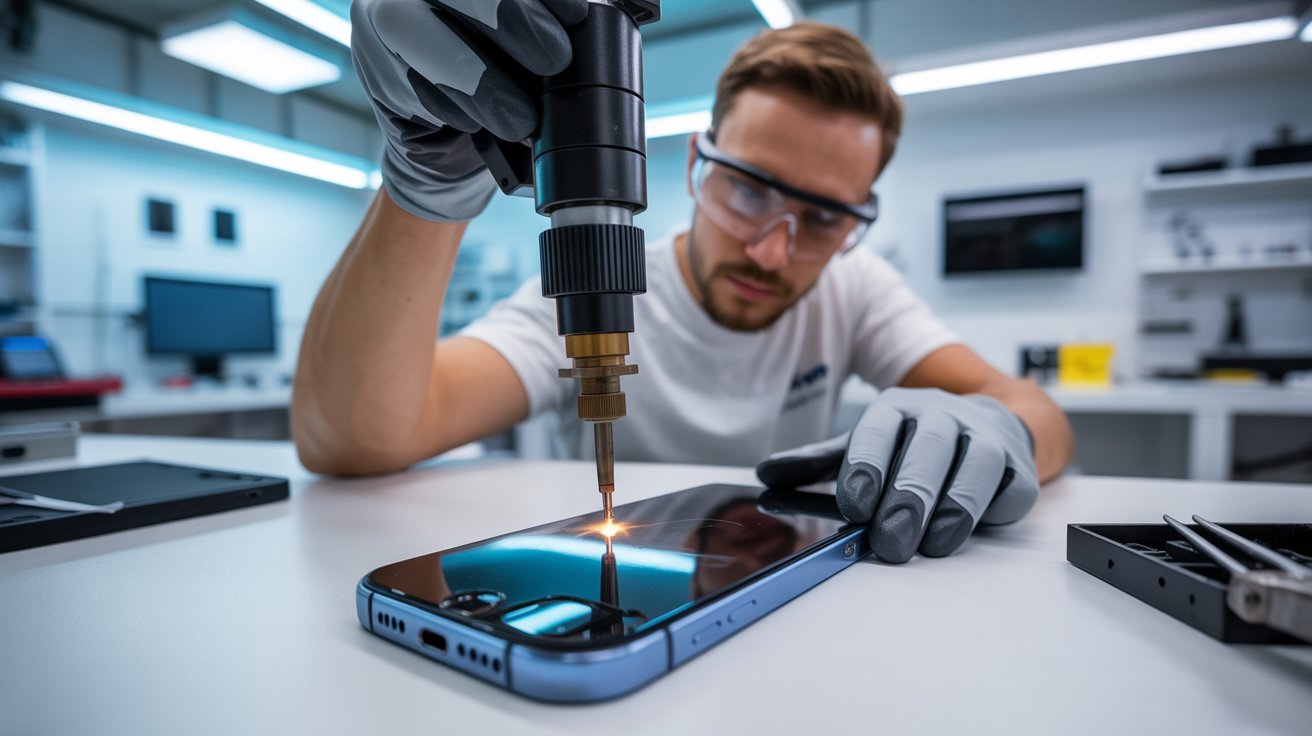
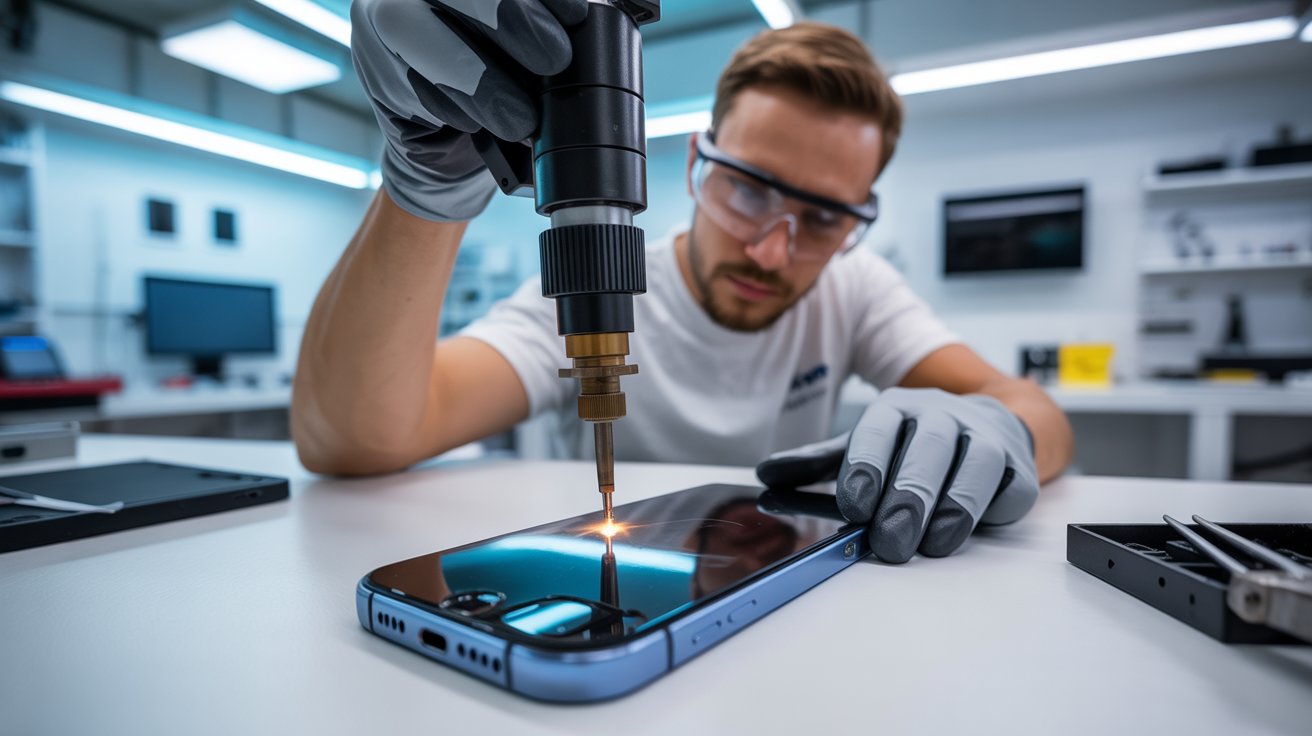
Our Houston repair facility uses precision laser machines specifically calibrated for back glass removal. Here’s how the process works:
The laser targets the adhesive layer between the glass and phone frame. It breaks down the bonding agent without generating excessive heat that could damage batteries, coils, or other components. The glass separates cleanly, without prying, scraping, or force.
Why This Matters for Your Phone
Heat damage is cumulative. Traditional repair methods expose your battery to temperatures that degrade its capacity permanently. Laser removal keeps heat localized to the adhesive layer only, preserving your battery health.
There’s also zero risk of pry tool slippage. No gouged frames. No scratched internal components. No technician error causing additional damage while trying to fix existing problems.
The Result
Your phone leaves our shop looking factory-new. The new back glass sits flush, sealed properly, and ready to protect your phone exactly as the manufacturer intended. Wireless charging works perfectly. MagSafe accessories connect reliably. Water resistance gets restored.
How Much Money You Lose Trading In a Cracked Phone
Planning to upgrade eventually? That cracked back glass is costing you more than you think.
Trade-In Value Destruction
Apple, Samsung, and carrier trade-in programs all categorize back glass damage as significant defects. Here’s what that means in real dollars:
- An iPhone 14 Pro in good condition trades for approximately $400-500
- The same phone with cracked back glass? Maybe $150-200
- That’s $200-300 vanishing from your pocket
Third-Party Resale Gets Worse
Selling privately through Facebook Marketplace, Swappa, or Craigslist? Buyers in Houston are savvy. They know back glass damage means hidden moisture exposure risks. They’ll lowball aggressively or walk away entirely.
Even if you find a buyer, you’ll need to price significantly below market value to move a damaged device. The discount typically exceeds what professional repair would have cost.
The Math Makes Sense
Professional back glass repair typically runs $80-150 depending on your phone model. If that repair preserves $200-300 in trade-in value, you’re looking at a guaranteed return on investment.
Delaying repair only increases risk. Every day with a cracked back means more potential moisture damage, more structural degradation, and lower eventual resale value.
Case vs. Repair: Why Putting a Case Over the Cracks Isn’t a Permanent Fix
We understand the temptation. Cases are cheap. Repairs take time. Just covering the problem seems logical.
It’s not.
Cases Don’t Seal Anything
Phone cases protect against future impacts. They don’t seal existing damage. Moisture still reaches those cracks. Humidity still penetrates. Sweat still corrodes.
In fact, cases can make moisture problems worse. They trap humidity against your phone’s damaged surface, creating a constant exposure environment. The damage that might take months in open air happens in weeks under a case.
Glass Fragments Keep Moving
Those shattered pieces aren’t stable. Your phone vibrates constantly from notifications, calls, and haptic feedback. Each vibration shifts glass fragments slightly. Cases don’t prevent this movement—they just hide it.
Eventually, fragments work their way loose. They can damage internal components, interfere with wireless charging coils, or create new crack patterns that spread across previously undamaged areas.
The Illusion of Protection
A case gives you false confidence. You stop thinking about the damage. You forget it exists. Meanwhile, corrosion spreads, structural integrity weakens, and repair costs increase.
What could have been a simple back glass replacement becomes a motherboard repair. What started as a $100 fix becomes a $400 problem or a total loss.
The Smart Approach
Get the repair done first, then protect your phone with a quality case. You’ll have genuine protection backed by actual structural integrity, not cosmetic concealment of an active problem.
Take Action Before Hidden Costs Multiply
That cracked back glass is actively damaging your phone right now. Every Houston rainstorm, every humid afternoon, every workout session increases the risk.
Professional laser repair is faster, safer, and more affordable than most people expect. You’ll restore wireless charging, protect your phone from moisture, preserve your trade-in value, and eliminate the hidden costs of pretending the damage doesn’t matter.
Don’t let a cracked back glass become a dead phone. The fix is simpler than you think when you choose the right repair method and act before the damage spreads.
Leave a Comment
Your email address will not be published. Required fields are marked *